Riding Dead Horses


I found the following list posted by Harry K. Jones on AchieveMax Blog.  It strikes me that churches in a post-denominational age need to make a practice of stopping to ask themselves: “Are we attempting to ride dead horses?”  That’s a structural/organizational question that is increasingly important to consider in a culture in which Emerging generations have less and less commitment to traditional churches and denominations.

The tribal wisdom of the Dakota Indians, passed on from generation to generation, says that, “When you discover that you are riding a dead horse, the best strategy is to dismount.”

In contrast, here’s how many in today’s [religious] environment respond when they find out their “horse” is dead:

  1. Say things like, “This is the way we always have ridden the horse.”
  2. Appoint a committee to study the horse.
  3. Buy a stronger whip.
  4. Change riders.
  5. Arrange to visit other locations to see how they ride dead horses.
  6. Raise the standards for riding dead horses.
  7. Appoint a triage team to revive the dead horse.
  8. Create a training session to increase our riding ability.
  9. Compare the state of dead horses in today’s business environment.
  10. Change your definitionsor rules by declaring, “This horse is not dead.”
  11. Hire outside consultants to ride the dead horse.
  12. Harness several dead horses together to increase speed and pulling power.
  13. Declare that “No horse is too dead to beat.”
  14. Provide additional incentive funding (more sticks – more carrots) to increase the horse’s performance.
  15. Do a case-study to see if competitors can ride it cheaper.
  16. Purchase a software package or institute a new program to make dead horses run faster.
  17. Declare that the horse is “better, faster, and cheaper” dead.
  18. Form a quality circle to find uses for dead horses.
  19. Revisit the performance requirements for dead horses.
  20. Downsize the dead horse.
  21. Reassign fault to the dead horse’s last rider.
  22. Promote the dead horse to a supervisory position.
  23. Shorten the track.
  24. Declare the dead horse was “one of the leading horses” in its day.
  25. Establish benchmarks for industry dead horse leaders.
  26. Gather other dead animals and announce a new diversity program.
  27. Put together a spiffy PowerPoint presentation to get planners to double the dead horse R & D budget.
  28. Get the dead horse a web site!

by Derek Penwell
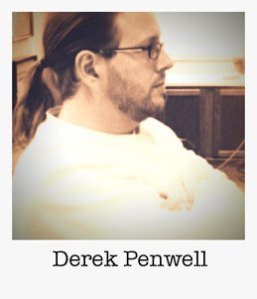
 

Derek Penwell is senior pastor of Douglass Boulevard Christian Church (Disciples of Christ) in Louisville, Kentucky and lecturer at the University of Louisville in Religious Studies and Humanities.  He is the author of articles ranging from Stone/Campbell history to aesthetic theory and the tragic emotions.  He is a graduate of Great Lakes Christian College (B,R.E.), Emmanuel School of Religion (M.A.R.), Lexington Theological Seminary (M.Div. and D.Min.), and a Ph.D. in humanities at the University of Louisville.  He currently blogs at The Company of the Eudaimon and on Twitter at @reseudaimon.  Penwell frequently crochets Mexican serapes from the tattered remnants of repurposed 1970s tube socks.

Responses

  1. J. Sue Gagliardi Avatar

    A really good one, Pastor Derek! For goodness sake, do get that dead horse a website; there are so many dead heads on there. ;o)

    Like

  2. John Smith Avatar

    Hi, Derek – excellent post!

    I plan to steal this for my work with several groups at our church, who need to consider why” things are no longer the way they have always been”.

    This is a gentle way to get a sharp point across:)

    John

    Like

  3. Lon Oliver Avatar

    I liked the post Derek. My father, a cowboy who worked cattle across Wyoming, liked to say, “you can’t go nowhere on a ten dollar horse no matter how expensive of saddle you put on its back.” The point seems to support the wisdom of the Dakota Indians. My comments would be: 1) Naming a “dead horse” is best done in community. It may be that the rider is the one with the issues. The horse may be healthy and able to run if the rider would give the proper reins. Only in honest conversations with friends can we discern if the horse is sick or if the cowhand simply does not know how to ride. 2) Make sure the horse is dying and not just being used in the wrong setting (context). During my father’s first visit to Kentucky 20 years ago, he was less than impressed with Kentucky Thoroughbreds. “Not one of them could get a rider ten miles in a Wyoming blizzard,” he observed. “Give me a Morgan any day,” he concluded. In other words, just because you may need to change horses doesn’t mean that it isn’t a worthy animal. You can run the Kentucky derby with one and your tend cattle in winter with the other. Choose the right horse in the first place and you will not need to dismount in the middle of the ride.

    Like

  4. Darren Anderson Avatar

    Great article, I have seen some of these before. Another way to look at it is that we are trying to carry the dead horse.

    Like

  5. […] No change is ever universally accepted.  Some people will like it.  Some people will hate it.  Therefore, in making decisions, we need a more substantive criterion for deciding how to act than whether or not change is popular.  I would suggest to you that the criteria we use to discern whether the direction in which we are headed is the right direction ought to center on whether any decision increases our commitment to discipleship.  Does a particular decision help us more faithfully live out a vision of the gospel that understands hospitality as fundamental to our identity?  Are we embracing others in the way Jesus embraced others?  Are we producing disciples capable of embodying the truth of the gospel that God seeks to be reconciled to all creation?  Do we have a vision of Christian maturity that challenges us to move beyond the easy and convenient to accept that which asks that we lay down our lives, pick up our crosses, and follow Jesus down the sometimes dark and frightening road he travels?  Are we expending our resources in propping up structures and programs, the purpose of which has been… […]

    Like

Leave a comment